

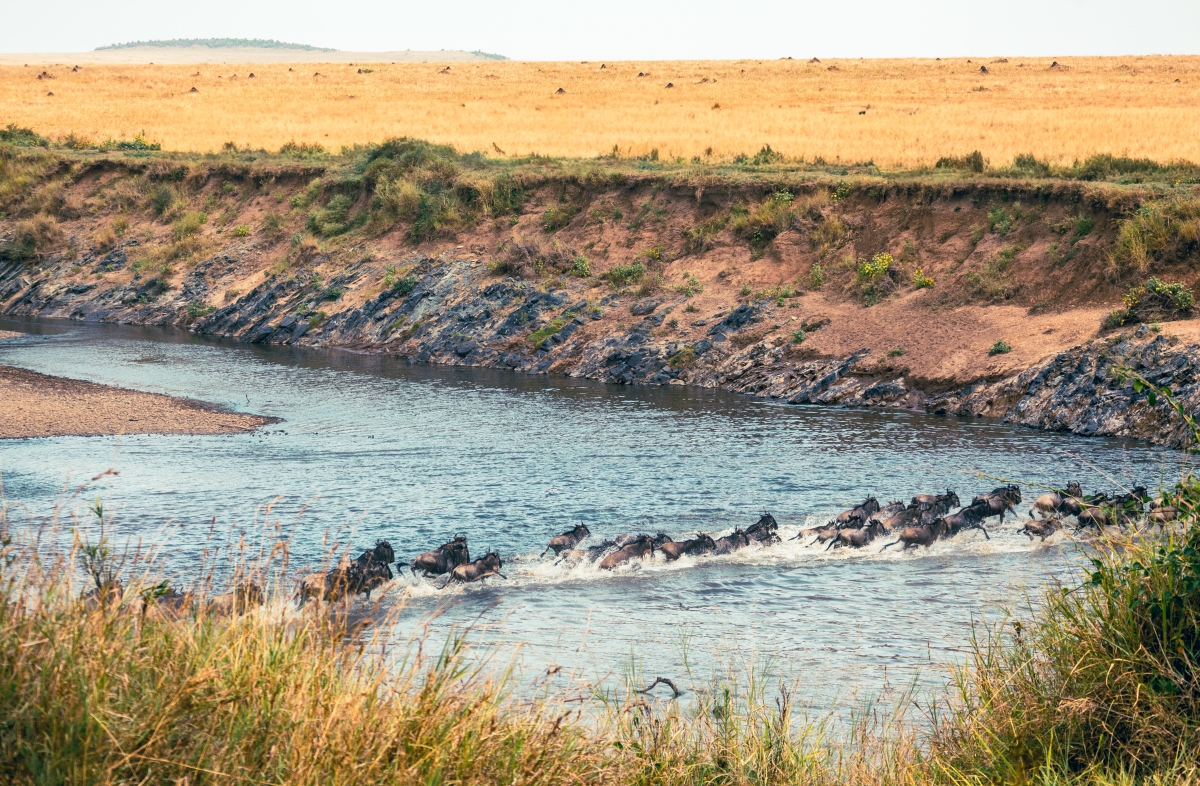
There’s absolutely no documentary, book; or glossy travel feature that quite prepares you for what it feels like to sit beside the Mara River and wait with hope during the 2026 migration season. The air thickens with anticipation and every rustle in the reeds equals a held breath.
From a morning that gave us almost nothing to an afternoon that gave us everything, here’s a recap on one of the experiences we had on our quest to capture the 2026 migration.
We set out from Saruni Wild in Lemek Conservancy at 5:00 a.m., bound for Talek Gate which we reached just before 7:00 a.m. From there, we crossed into the Maasai Mara reserve to find the migration for ourselves.
We had another hour drive to our crossing point, though we didn’t get far before the sky stopped us in our tracks. Hot air balloons drifted above the plains as the sun rose behind them, and for a few quiet minutes, nothing else mattered.
If you don’t fancy the long drive that comes with the relentless “African massage”, you can head straight for the Mara Triangle through Oloololo gate, an hour’s drive from the same camp. It is the quieter western stretch of the reserve, where fewer vehicles, well-kept roads and the same spectacular crossings come with a conservancy feel all their own.

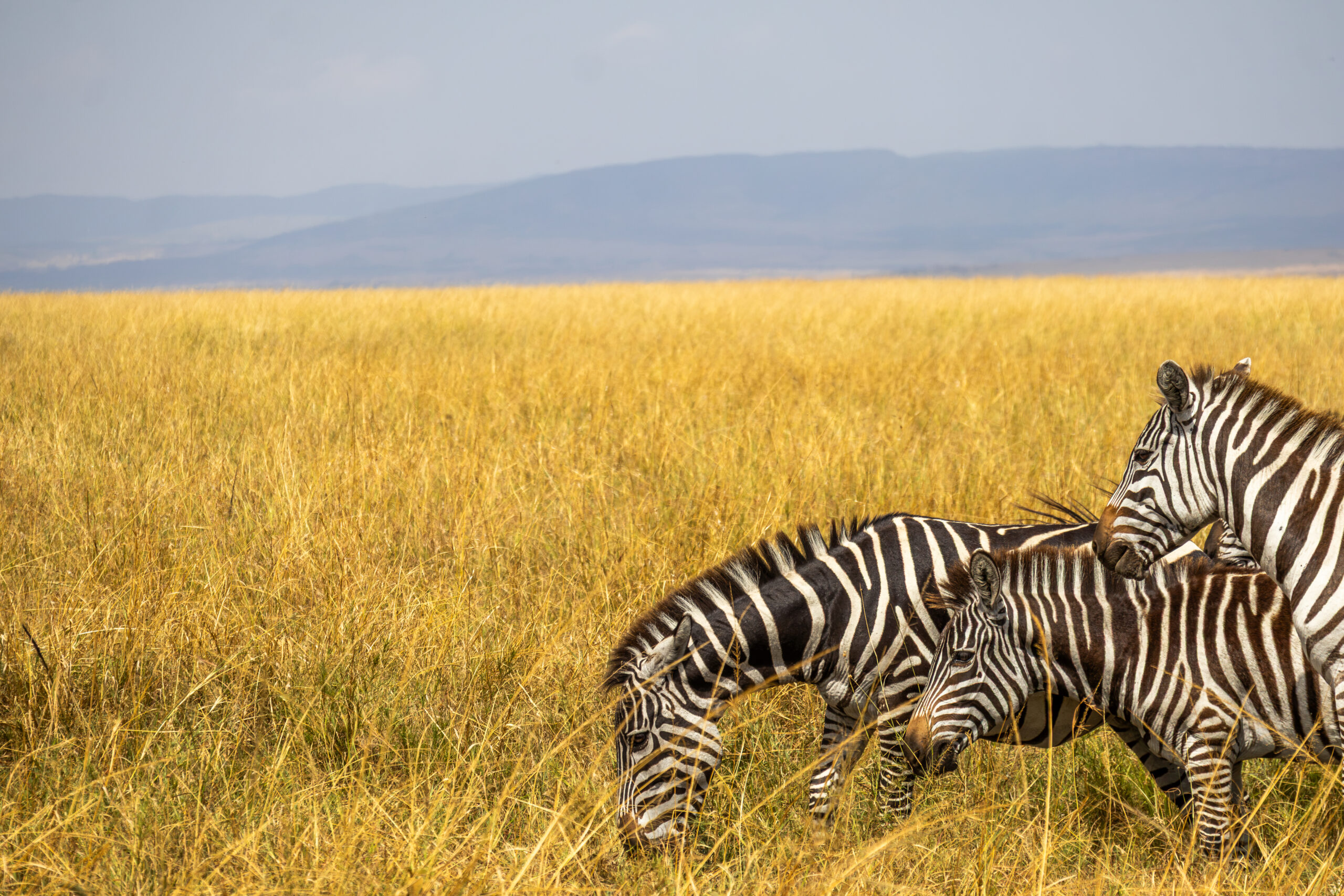
When we embarked on the journey, lions moved through the grass, giraffes browsed against the light and resident wildebeest and zebras grazed as they always do. On any other morning, we’d have stayed with them for a little while, but today, our hearts were set on one thing, the 2026 migration.
We arrived at the most storied crossing point in the Mara to find… nothing. Not vehicles. Not animals. Not people. Just the low murmur of the river whose water levels were questionably low and a handful of buffalo grumbling somewhere in the shallows.
It’s a special kind of heartbreak, waking up earlier than usual, driving hours only to find a moment that isn’t there.
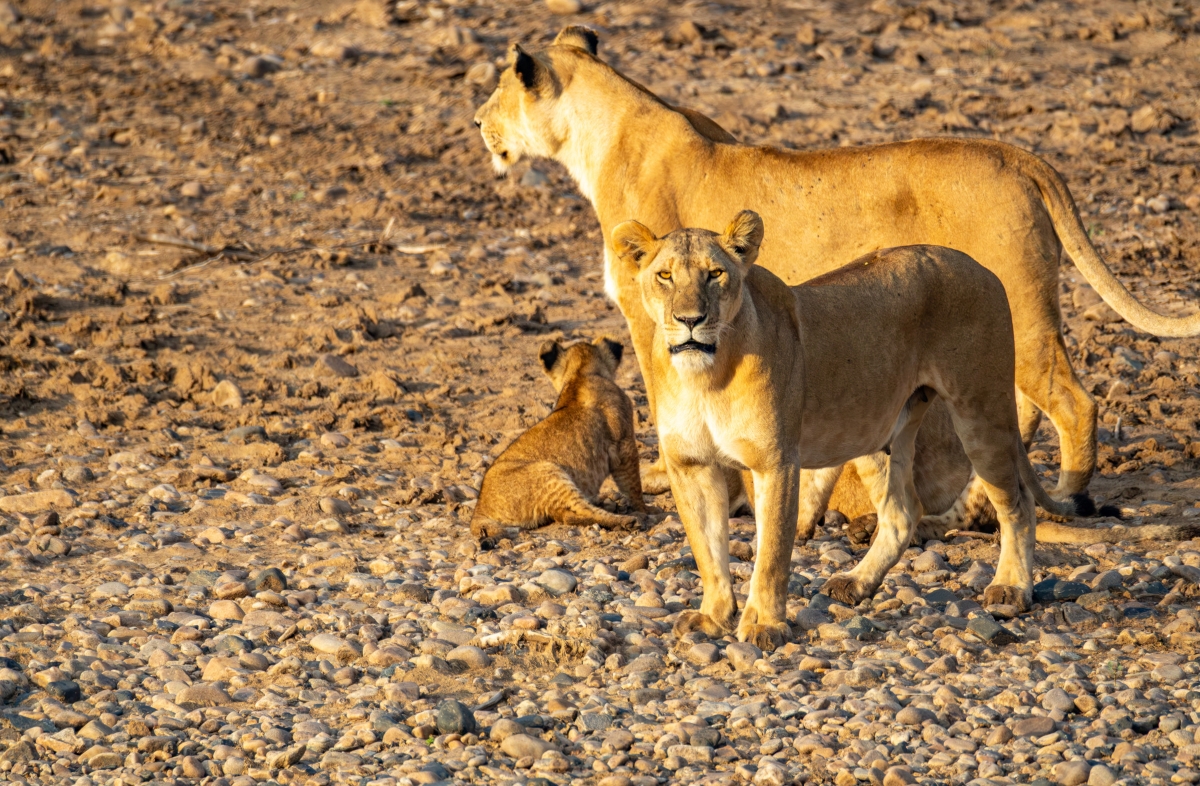
Still, Mara rewards those who stay. Holding onto hope, we decided to break for a bush breakfast and regroup, and it was on our way to find a spot that our guide spotted a lioness. Then another. Then three cubs, testing the wind, weighing whether it was safe to cross.
“We may have missed the 2026 migration,” one of us laughed, “but at least we caught the lioness crossing.”


We stayed with the lionesses a while longer, watching the cubs tug at their mothers while the mothers stood full guard, sniffing the air for any sense of danger before making the crossing. They did this a couple of times, and the idea of the lionesses making the crossing instead of the wildebeest started growing on us, except they didn’t seem to be in any hurry, so we left.
We finally found a tree and settled under it for breakfast. Afterwards, we set off again, tuning into the radio chatter, asking every guide we passed. Still nothing. We circled back to where we’d eaten, and found the area utterly transformed. Around three hundred wildebeest were moving toward the water, and we were the only vehicle for miles, until a minutes later when two other joined.
We held our distance and let them come to us. For nearly two hours, it was a game of nerve and patience: the herd would approach the bank, hesitate, and retreat, again and again.
A larger group appeared on the horizon, clearly bound for a crossing of their own; tempting, but we chose the bird in hand, or in this case, the wildebeest a stone throw away, rather than chase the bigger prize.
Then, without warning, a small group broke away and slipped down the bank. The water ran low, the crocodiles stayed out of sight, and one by one, they crossed. All but a lone female who lost her nerve at the water’s edge and turned back to the open savannah, visibly alone. Someone in our vehicle murmured, “Natural selection, at its finest.”
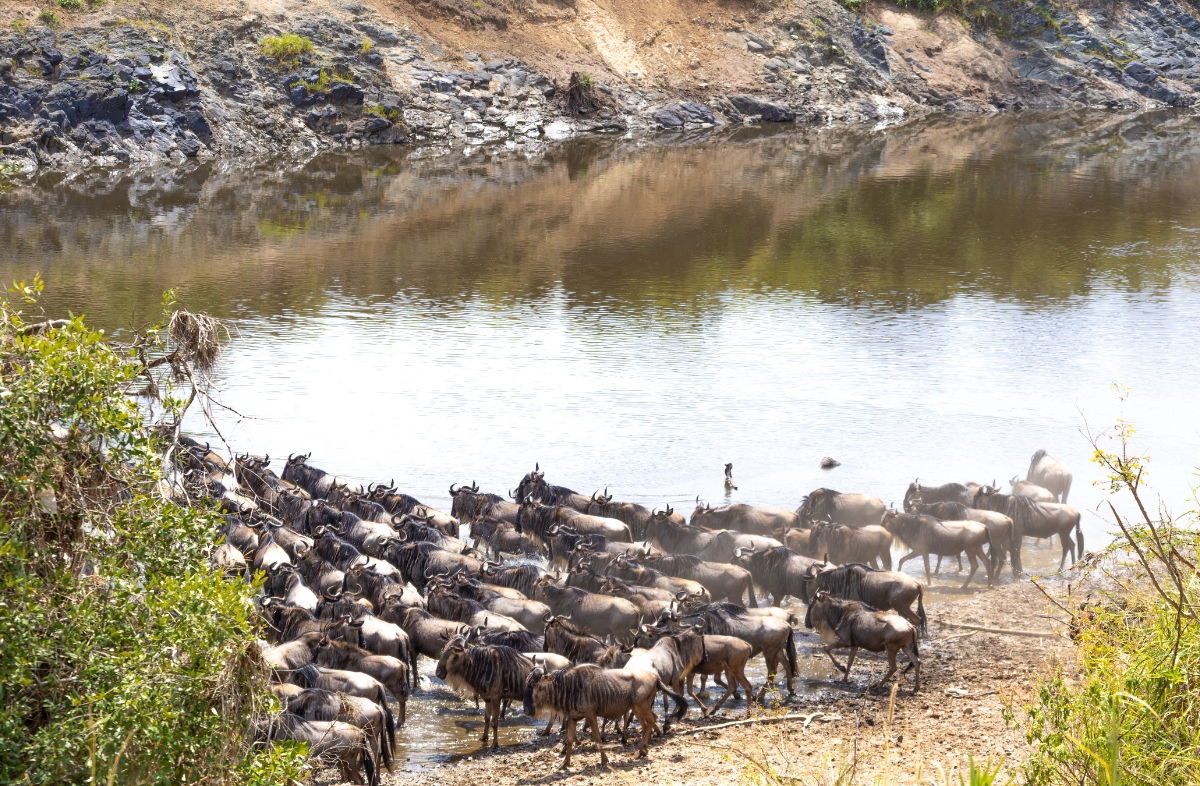
With that smaller crossing behind us, we set off after the larger herd only to find fifty other vehicles with the same idea. It took nearly two hours for the herd to wind its way down from the hills to the river, and even once they arrived, the wildebeest were in no hurry to decide.
We traded stories with guests from neighbouring vehicles as we waited. Some had watched all day only for the crossing to happen the next morning; others had arrived just moments too late and a few boasted of other successful watches.
Then, at last, they moved. The crossing came in a rush of commotion, half the herd surging across before the rest gathered their courage to follow. When the final animal reached the far bank, the vehicles around us broke into applause.
By the end of the day, we’d witnessed three crossings, each entirely its own: an intimate one shared with just two other vehicles, and a sweeping one shared with a hundred. If this is what a single day of the 2026 migration can offer, we felt remarkably fortunate.
What the 2026 Migration Taught Us

- The migration isn’t a single event. It’s a continuous, unfolding story, with millions of animals moving in waves rather than one great tide. The largest crossings happen as the herds move from the Serengeti into the Maasai Mara, while smaller crossings continue within the reserve itself, as animals move between the Mara and the Mara Triangle.
- The species don’t always travel together. Some days bring only wildebeest or zebras alone. On rare, lucky days, you’ll see wildebeests, zebras, and gazelles crossing as one.
- A crossing doesn’t need to be enormous to be unforgettable. A handful of animals making the leap is still a triumph.
- Patience is everything. The wildebeest move on their own time, and that time is rarely convenient for ours.
- Even in high season, the migration can elude you. Some herds pace the riverbank for days before finally committing.
- No two crossings are alike, even at the same spot, on the same day. The only way to know your own story is to be there for it.
A Gentle Word Before You Go

If you’re planning your own journey to the river, come with an open mind. The wild keeps its own calendar. But for those willing to wait, there’s always something worth witnessing even on the days the wildebeest keep you guessing.
The 2026 crossing is still underway. Get in touch and we’ll help you find your place beside the river.