

It is just after dawn at Kisima Hamsini, the “Fifty Wells” of Sera Conservancy in northern Kenya and the sandgrouse are already calling; a soft, bubbling chatter that drifts in long before the flocks appear.
There are no herders in sight and the burbling draws you in before you catch a glimpse of the spectacle. As you approach the spring from which they draw their water you see them come in waves.
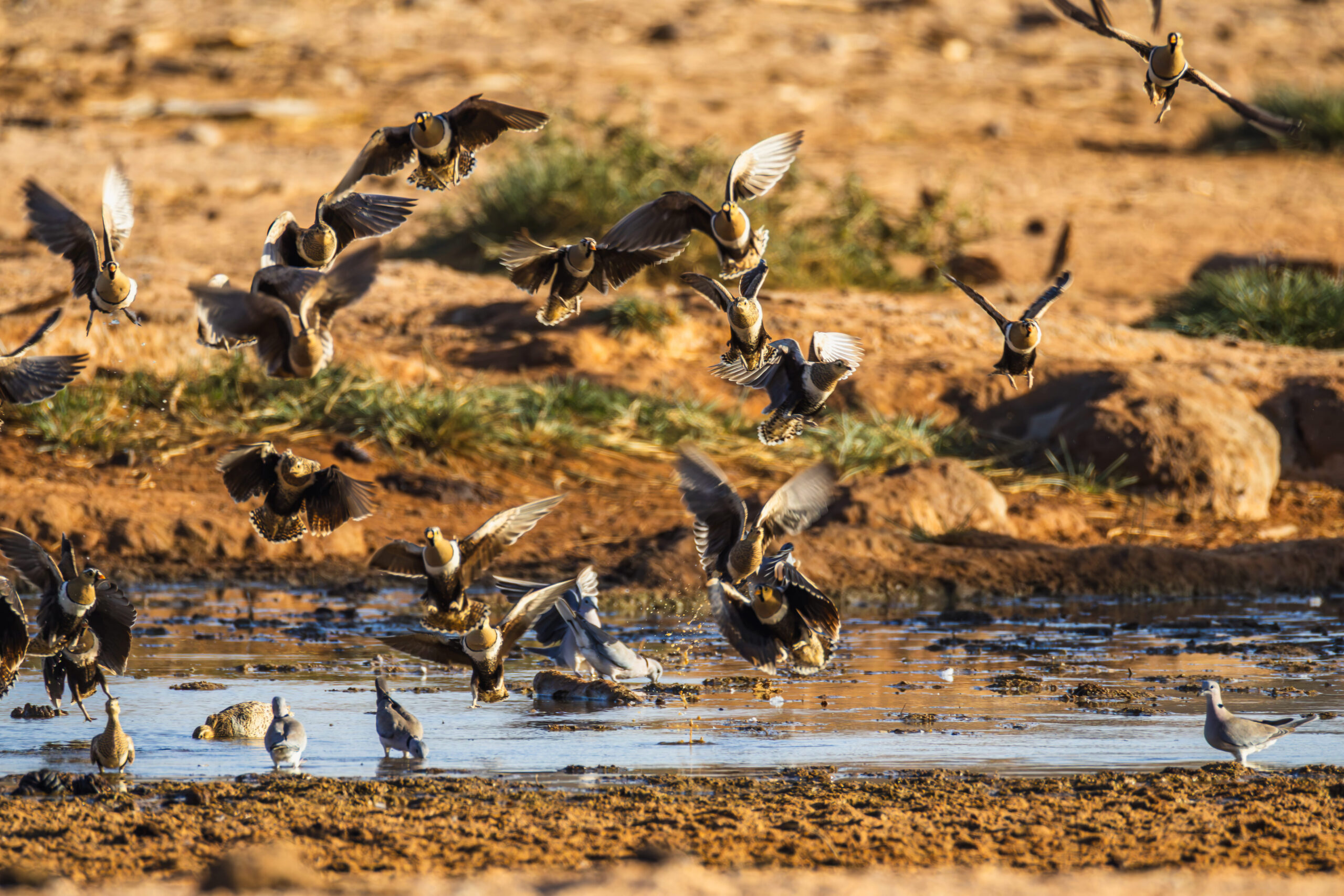
Flock after flock sweeps low over the rocky ground, wings flashing gold and chestnut in the early light, before settling at the water’s edge in a restless, murmuring crowd.
For around half an hour, the place is alive with them. Thousands of birds drop in, drink quickly and lift away again, while the next flock is already circling overhead.
Watch closely and you’ll see the males wade in to soak their belly feathers, which are specially adapted to hold water like a sponge. Then they fly back across the dry plains, sometimes for many kilometres, so their chicks can drink from their feathers.
It’s one of the most remarkable acts of parenting in the bird world, and seeing it unfold in front of you is something you won’t forget.

The same springs that feed the wells draw in the sandgrouse, and the birds prefer them quiet. As your guide will explain, the two share the water in turns: the busier the wells, the fewer sandgrouse.
That’s why timing matters. Guests staying with us at Saruni Rhino are driven out earlier, before the herders and their animals, and most of the times they end up having the birds almost to themselves.
It also means the morning rarely disappoints. If the herders are grazing elsewhere and the wells stay quiet, the sandgrouse flocks are at their largest. Either way, the journey is worth it.
As the last flocks thin out, a new sound carries across the plain: the low clank of camel bells.
Herders appear on the horizon with their animals and climb down into the wells, two or three metres deep. Standing one above the other, they pass buckets of water hand to hand up to the troughs, singing as they work. The songs keep the rhythm, ease the effort, and call each herd to drink.
The Singing Wells can’t be photographed or filmed, so this part of the morning is yours to simply watch and listen, unless consent is given explicitly. It’s a tradition that has carried on here for generations, and a privilege to witness.
More Than Sandgrouse
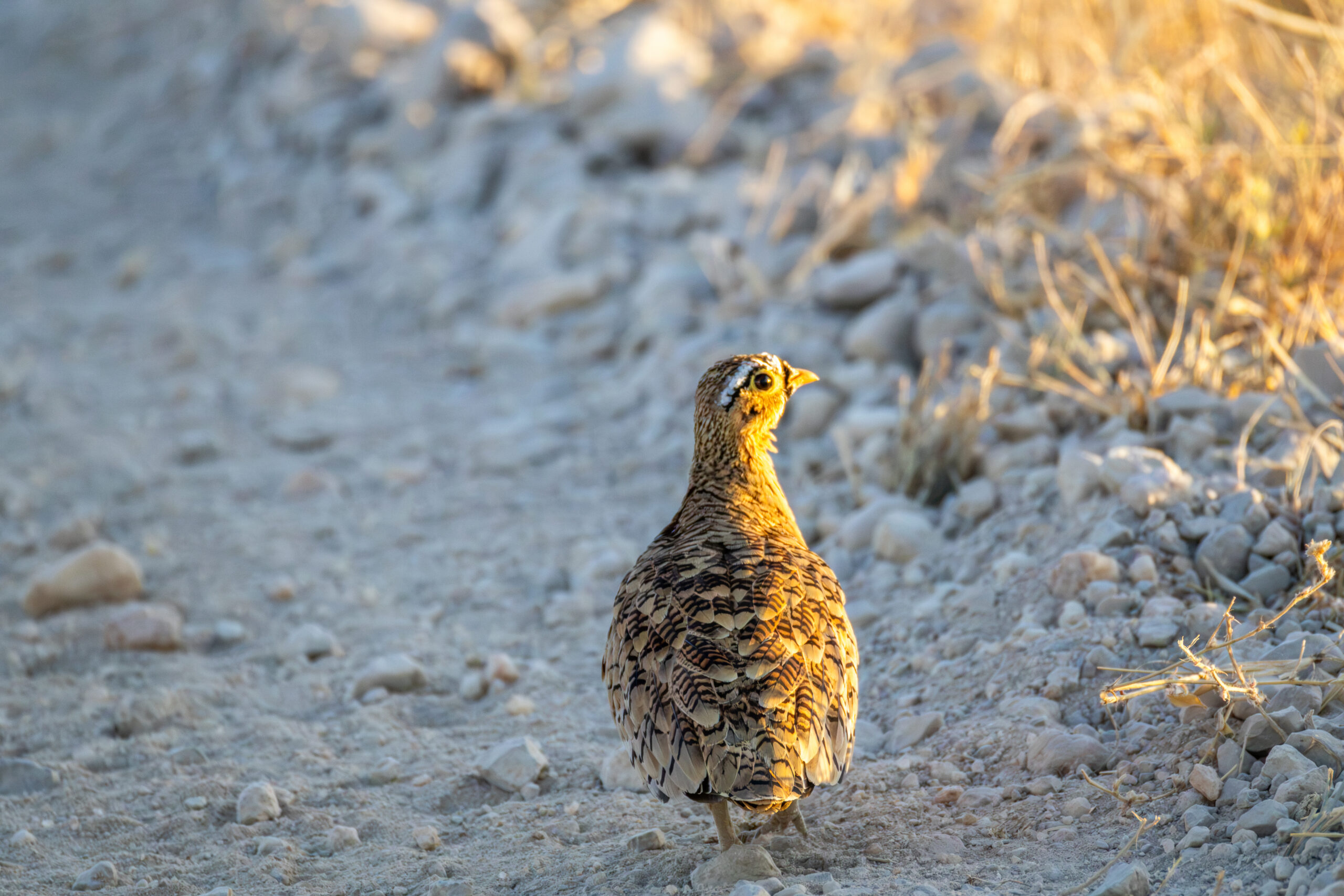
Permanent water in such a dry landscape draws birds from all around. Keep your binoculars close, because the area around the wells is rich in northern Kenya’s specialities, including:
- Vulturine guineafowl, with their cobalt-blue feathers
- Somali bee-eater
- Golden pipit
- Golden-breasted starling
- D’Arnaud’s barbet
- Rosy-patched bush-shrike
For keen birders and photographers, Sera offers some of the most rewarding mornings in Kenya.
Watching the Sandgrouse: A Few Gentle Guidelines
The sandgrouse spectacle lasts only around half an hour, and every minute of it matters to the birds. Many have flown long distances to drink, and the males still have the journey home ahead, carrying water for their chicks. A little care from us helps the morning unfold as it should.
Arrive early and settle in. Be in position before the first flocks arrive, so your arrival doesn’t disturb them. Your guide will show you the best spot.
Keep your distance. Sandgrouse are wary at the water’s edge. If a flock lifts off without drinking, it may not return. Stay well back and let your binoculars or a long lens bring them close.
Stay still and quiet. Sudden movements, raised voices and slamming doors can send a whole flock into the air. Speak softly, move slowly, and let the sounds of the morning take over.
No flash. Natural light is all you need, and the early sun does beautiful things to their gold and chestnut feathers.
Respect the wells. Kisima Hamsini is a working water source for the Samburu herders and their livestock. When they arrive, give them space, and always ask before photographing anyone.
Leave it as you found it. Take nothing away and leave nothing behind, so the wells stay just as welcoming for the birds, the herders and the next morning’s visitors.

Some of Kenya’s most unforgettable wildlife moments don’t involve a single predator. They happen at a secluded water spring, as thousands of wings fill the morning air.
Spend a few nights at Saruni Rhino and let our guides take you to the wells at dawn. Your stay also supports Sera Conservancy, where community-led conservation keeps this landscape, and its traditions, thriving.
[Discover Saruni Rhino]