

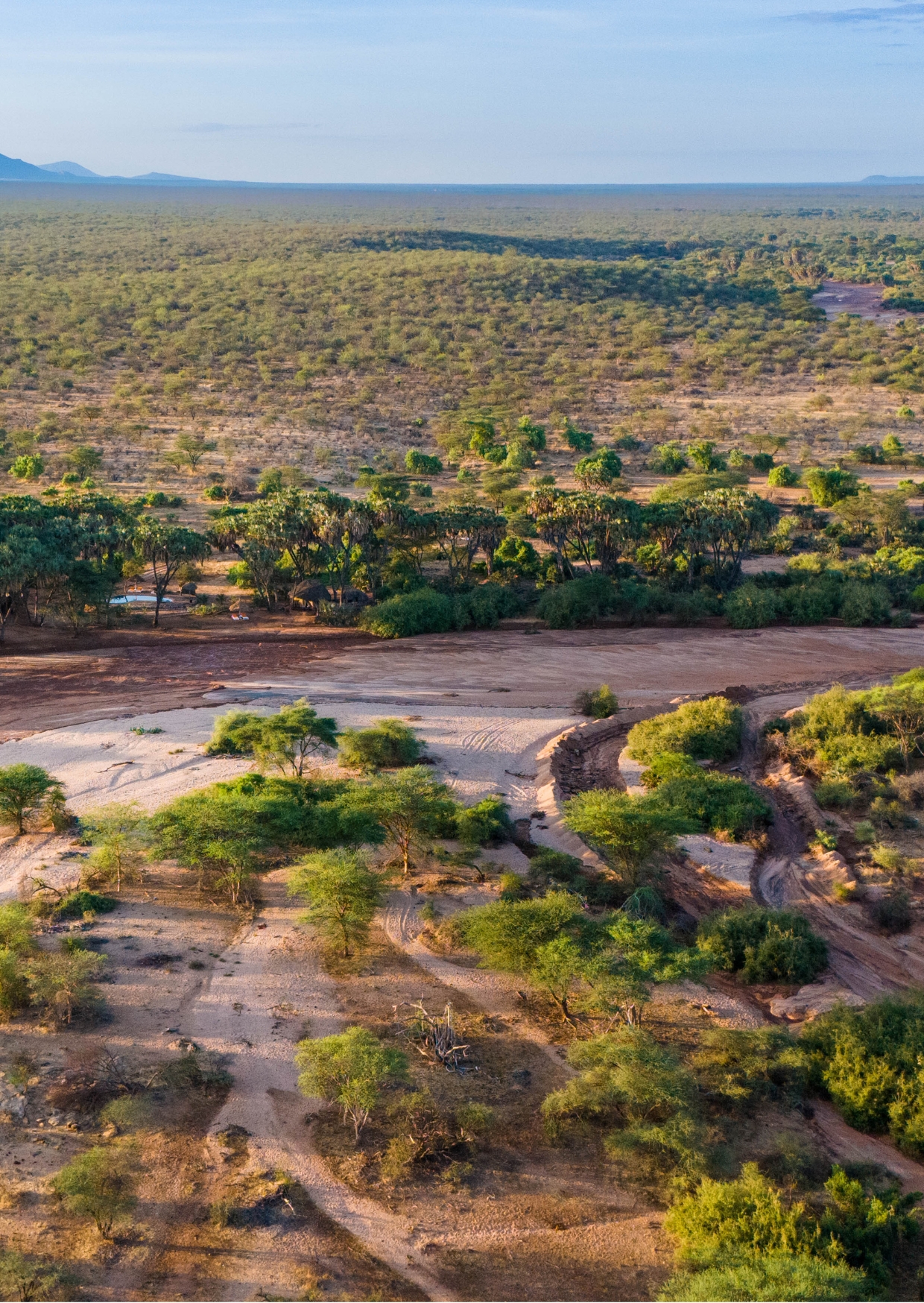
The moment your plane touches down, Samburu begins to unfold. The airstrip sits in open scrubland, and before you collect your luggage, the landscape is already calming your soul. The air is different here, drier and warmer carrying the faint scent of red earth and acacia. The sky, uninterrupted by anything man-made, stretches wider than seems possible.
And then, almost immediately, the first game drive commences as wildlife starts emerging on your transfer from the airstrip. Reticulated giraffes stand at the roadside, their deep rust and cream geometric coats catching the afternoon light, entirely unbothered by your arrival. Grevy’s zebra graze in the open scrub, their narrow, precisely drawn stripes unlike anything you will have seen in the south. A gerenuk pauses at the edge of the thornbush, balancing impossibly on its hind legs to reach a high branch. This incidental sighting is Samburu introducing itself.
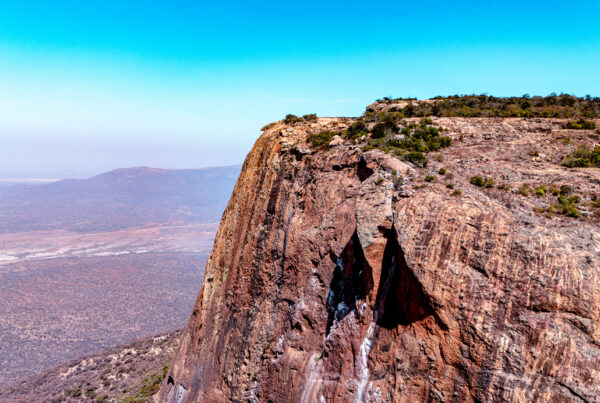
And then, you get to your tent in Basecamp Samburu and Mt. Ololokwe appears. It does not announce itself gradually the way most mountains do. It simply arrives on the horizon; a vast, flat-topped mesa of dark basalt rising from the plains like something placed there deliberately. At roughly 1,230 metres, its sheer sandstone cliffs drop hundreds of metres on all sides. Its silhouette is so unmistakable, so permanent, that the Samburu have oriented their spiritual world around it for generations.
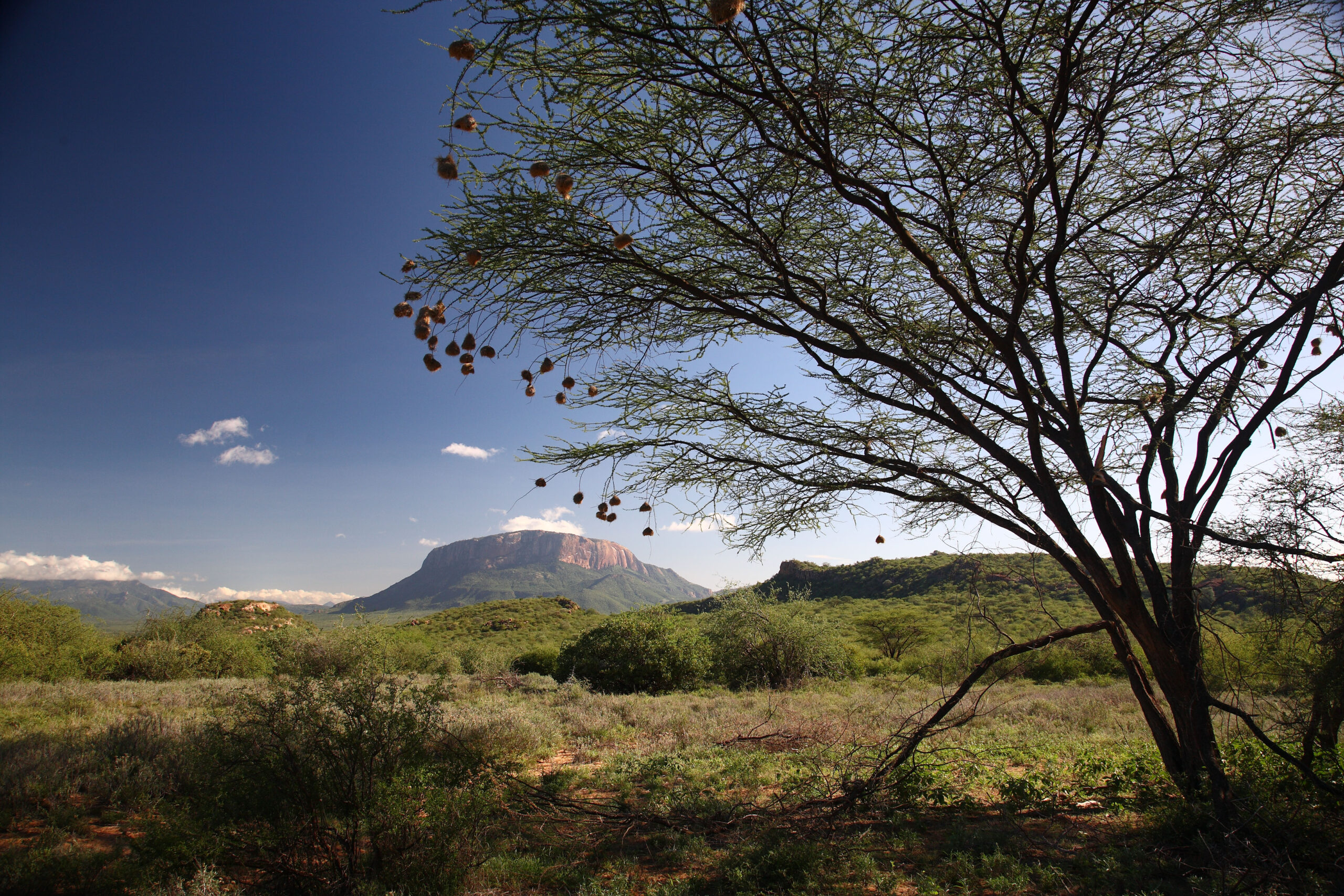
They call it Ol Donyo Sabache. Joyce grew up with it on the horizon every morning of her life. It has always been there, as certain as the guinea fowl’s call at first light.
“When visitors arrive and see it for the first time,” she says, “their faces change. They stop talking. I understand that feeling. I grew up with it, and it still does that to me.”
From the verandah of your tent, Ololokwe holds the horizon in a way that becomes the quiet anchor of your stay. You will find yourself looking at it differently as the light changes throughout the day. Pale and hazy at noon. Copper-edged at sunset. A dark, enormous presence against the stars at night.
For the Samburu people, Ololokwe is not merely a scenery. It is a living witness to the rhythms of life. In the wet seasons of Joyce’s mother’s younger years, women would dress in full ceremonial regalia to offer a thank-you for the blessing of water. When drought came, they returned in supplication with the same prayers and the same faith to the land that was listening.
Naikunyi Laka, Joyce’s mother, has made this journey more times than she can count. As children, Joyce and her siblings would secretly trail the adults on these journeys, watching from a careful distance, barely breathing. The adults would pretend not to see them because they knew it was how the Samburu culture passed itself forward.
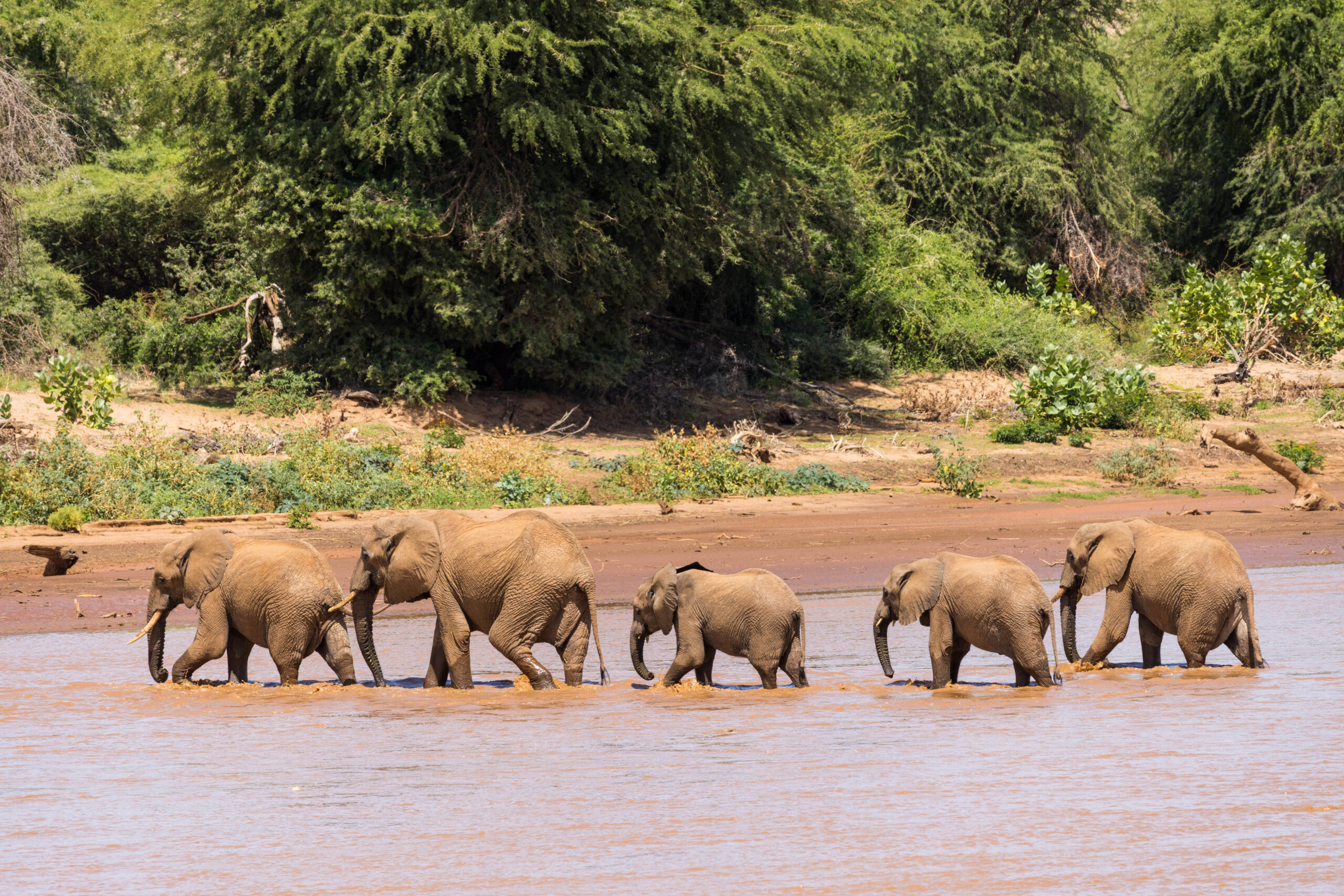
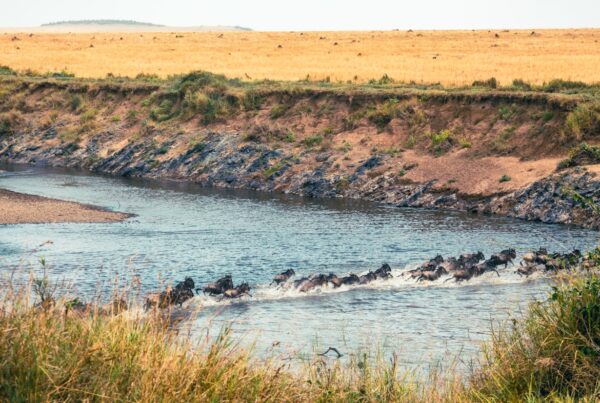
During your game drive, you’ll discover the Ewaso Nyiro the only permanent river in Samburu, moving steadily through the landscape. Elephants arrive at its banks at dawn in unhurried procession.
The river draws everything living towards it, and from your camp you are never far from the sound and movement of that daily rhythm.
Joyce grew up reading this river the way other children read books. “When we were children, we knew the river’s mood,” she says. “People come here hoping to see elephants at the river. We grew up stepping around their footprints on the way to school.”
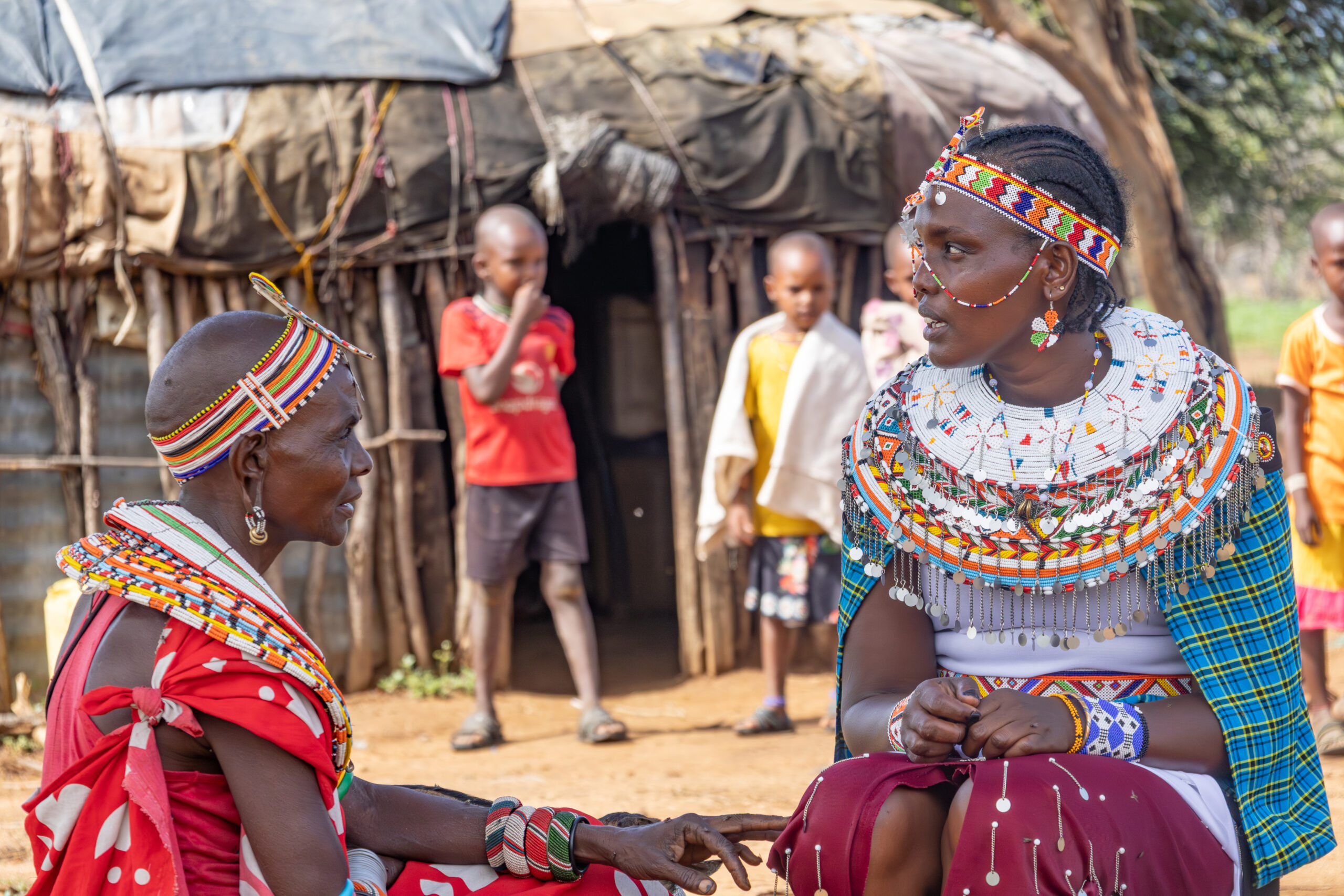
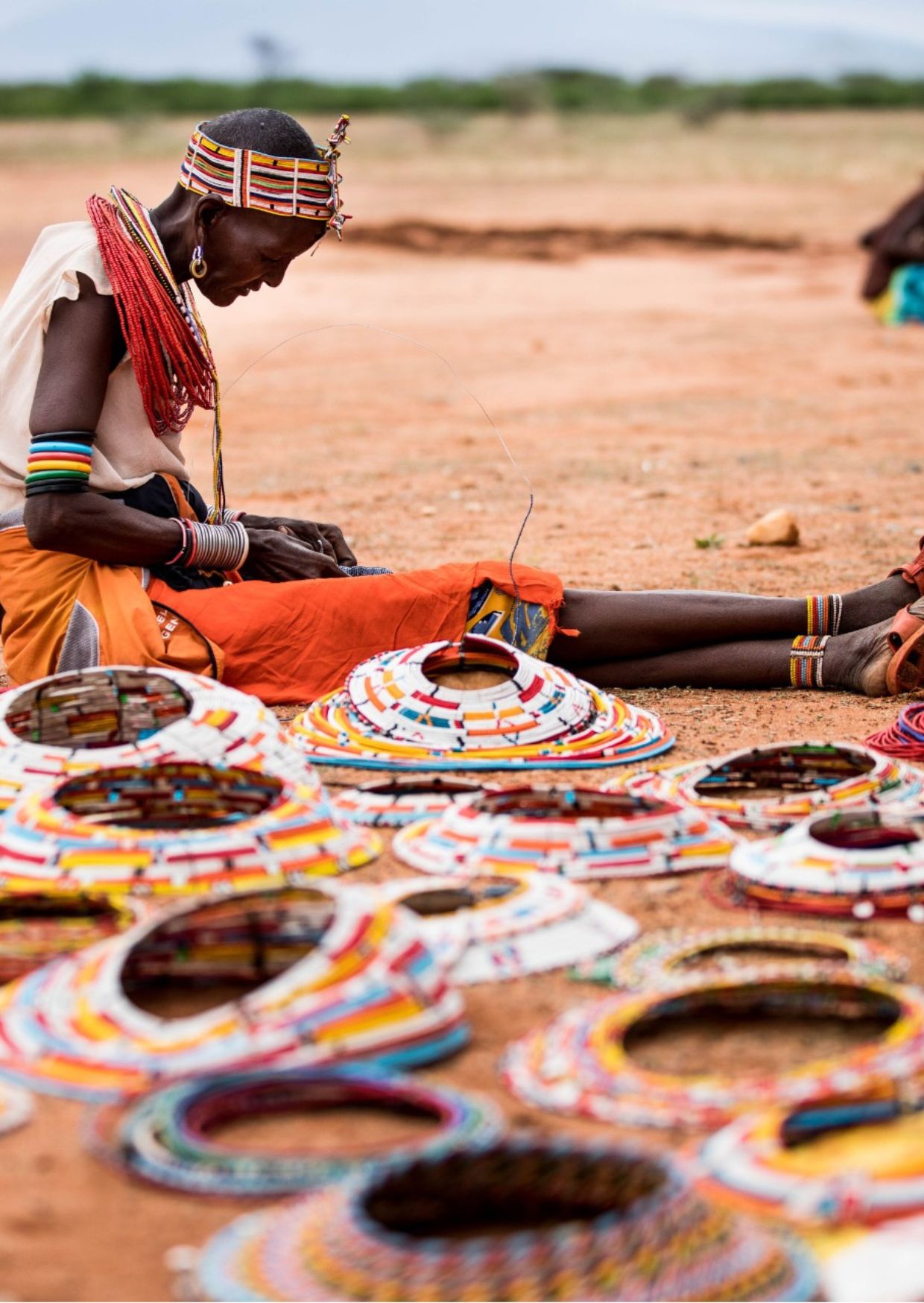
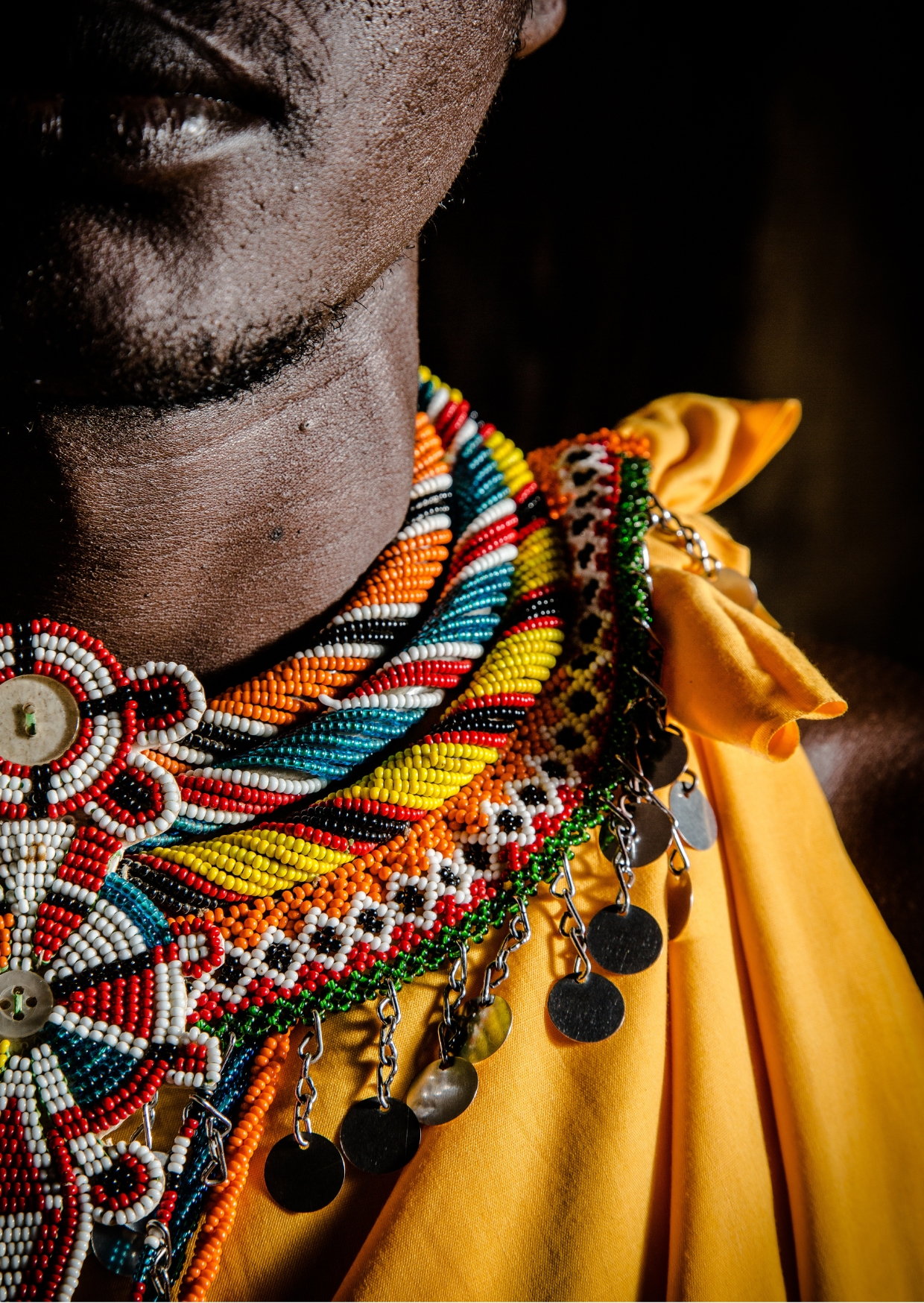
One afternoon, your guide will take you into the community to a village like Malapo’s Kiltamany for a visit. Pull up at a compound on any given day and you will find the women in full Samburu dress, not because you are coming, but because this is simply how they live. Bright reds and deep ochres. Beads stacked in precise, heavy layers at the neck, shoulders and wrists; white for purity, red for bravery, blue for blessings.
What you’ll witness is a community that has always understood something the rest of the world is still learning: that the land and the people who belong to it are inseparable. The same instinct that draws women to Ololokwe to pour milk in thanks for rain is the instinct that led the Samburu community to conserve the black rhino from the edge of local extinction.
The wildlife you encounter here thrives because the people who share this land with it chose to protect it.
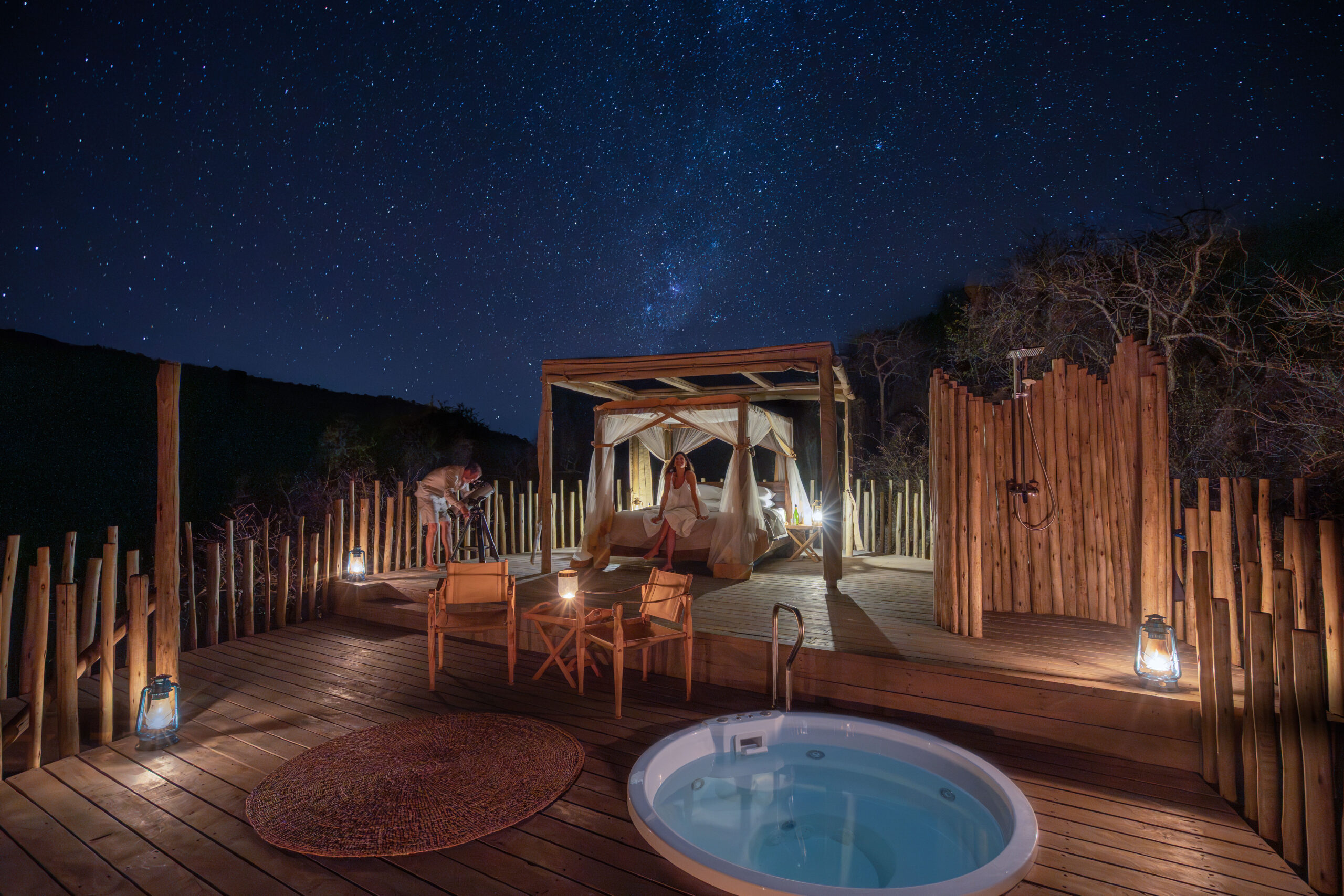
When the sun goes down, Samburu offers something else entirely. Far from any city, with almost no light pollution to soften it, the night sky here is among the clearest on earth. The Milky Way does not appear as a faint smudge on the horizon. It stretches, unbroken, from one edge of the sky to the other, so dense and vivid it feels close enough to reach. Between June and October, shooting stars arc across the darkness in fleeting, brilliant streaks.
And then the rest of it reveals itself. Constellations you half-remember from school suddenly make sense. Planets hang bright and unhurried against the dark. There is a particular quiet that comes from lying back beneath all of this.
The endless scroll of daily life all dissolves into the far reaches of space. What remains is a fire dying down, the bush settling into darkness and above you, a sky so full it feels like a conversation you were always meant to be part of.
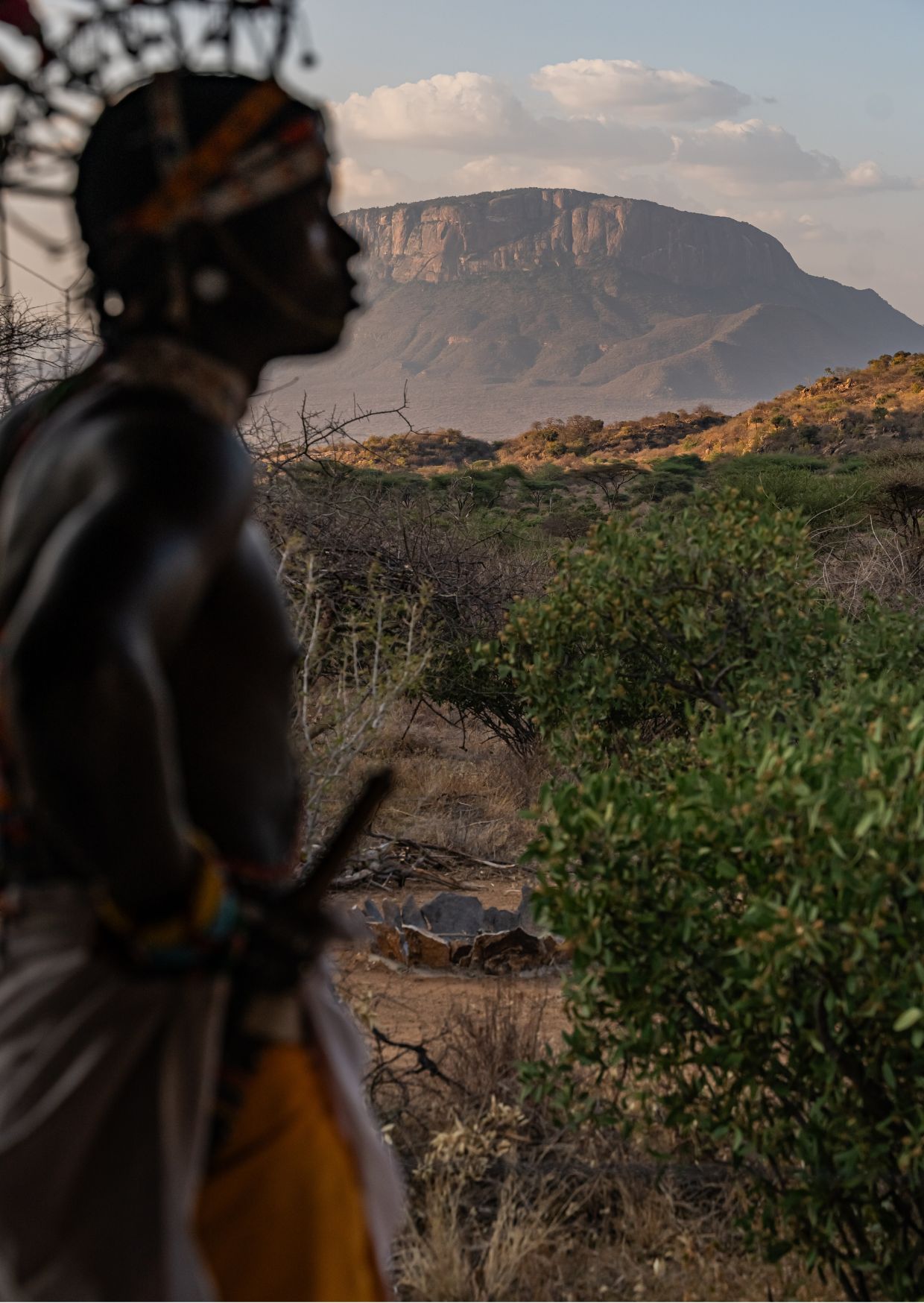

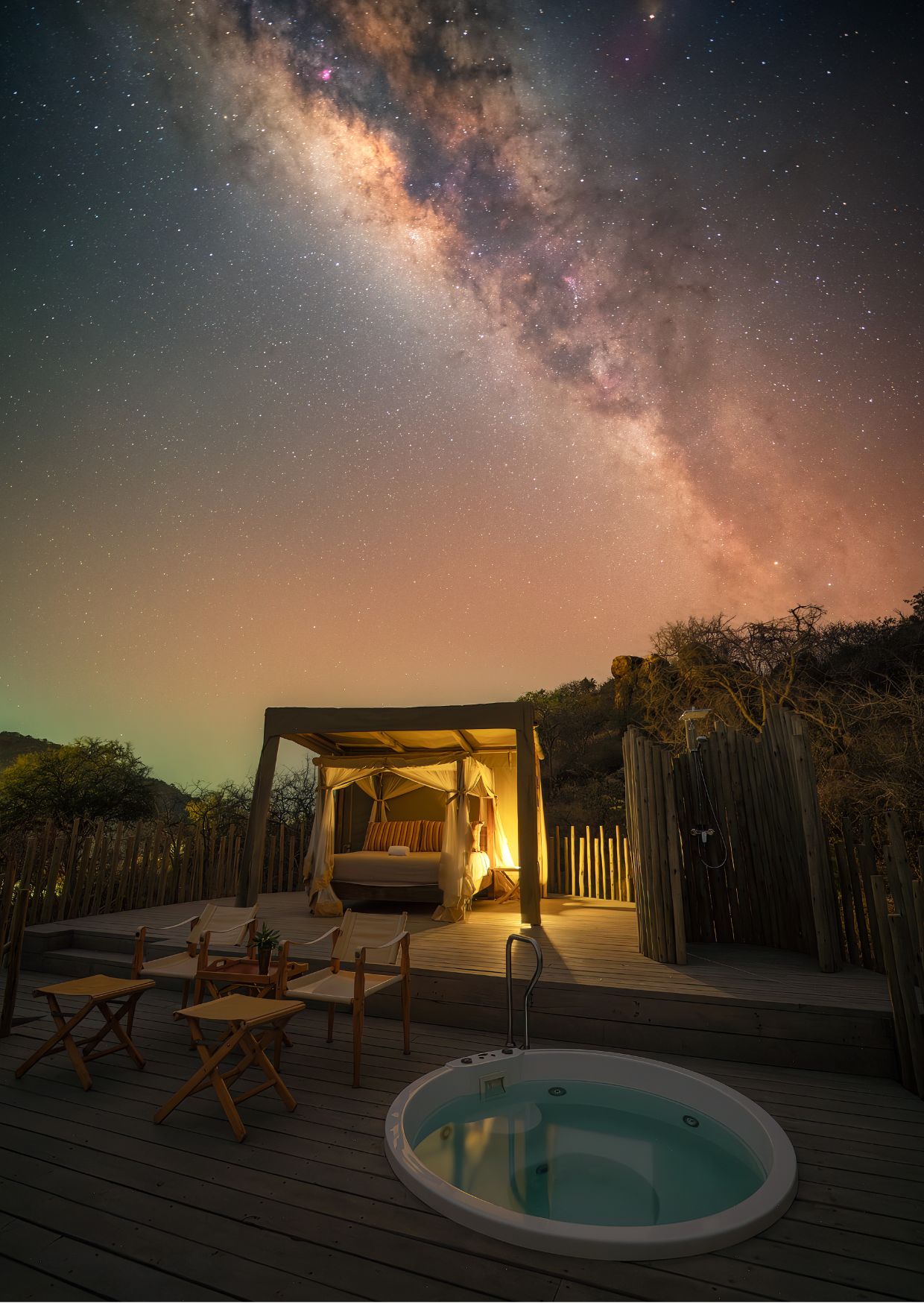
This is Samburu, where the landscape presents itself in many layers. From the open scrubland that greets you on arrival, the mountain that anchors everything, the river that never stops, the wildlife that lives here as though oblivious to the rest of the world, to the night sky that makes the rest of the world feel very far away.
It is beautiful and profound in a way that is difficult to prepare for. The best thing you can do is come and let it wrap your soul in absolute tranquility.