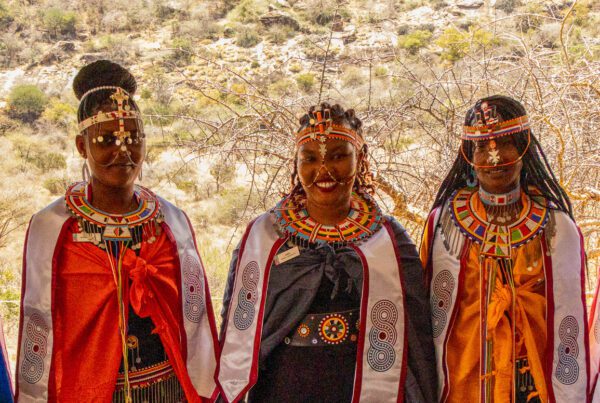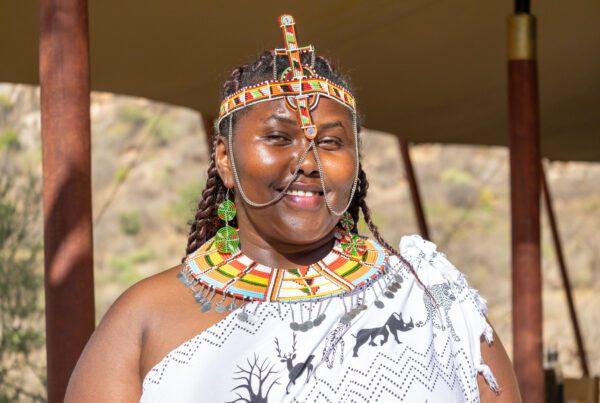


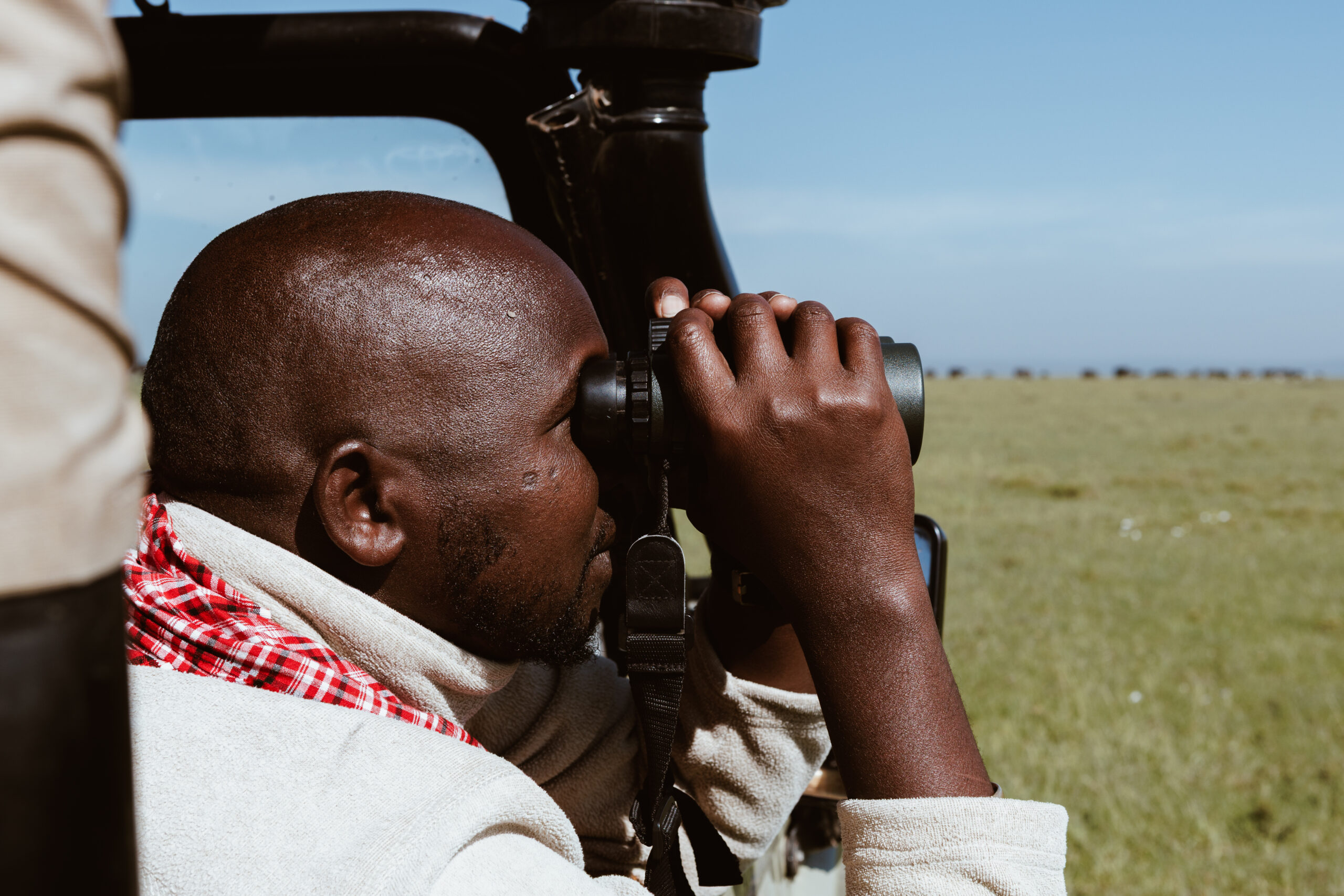
Before the first cup of coffee is poured and the camp stirs to life, our guides are already up listening to what the wilderness is trying to say. Years of accumulated knowledge distilled into a single morning’s instinct.
We have always believed that a safari is only as extraordinary as the person sharing it with you. Our tents are beautiful, the landscapes can take your breath away, but it is the guide who transforms a sighting into a story you carry home long after the dust has settled.
At Saruni Basecamp, guiding is a calling that deepens with every season spent in the field. We nurture each guide to develop their own area of mastery: the birdwatcher who hears a species before it is visible, the tracker who reads a story in the soil, the walking safari specialist who knows how the land breathes underfoot, the big cat expert who understands the quiet language of lions.
The result is a community of people who do not just interpret the wild but live it. Meet some of them:
Esmey Soyian: The Guide Who Never Stopped Learning
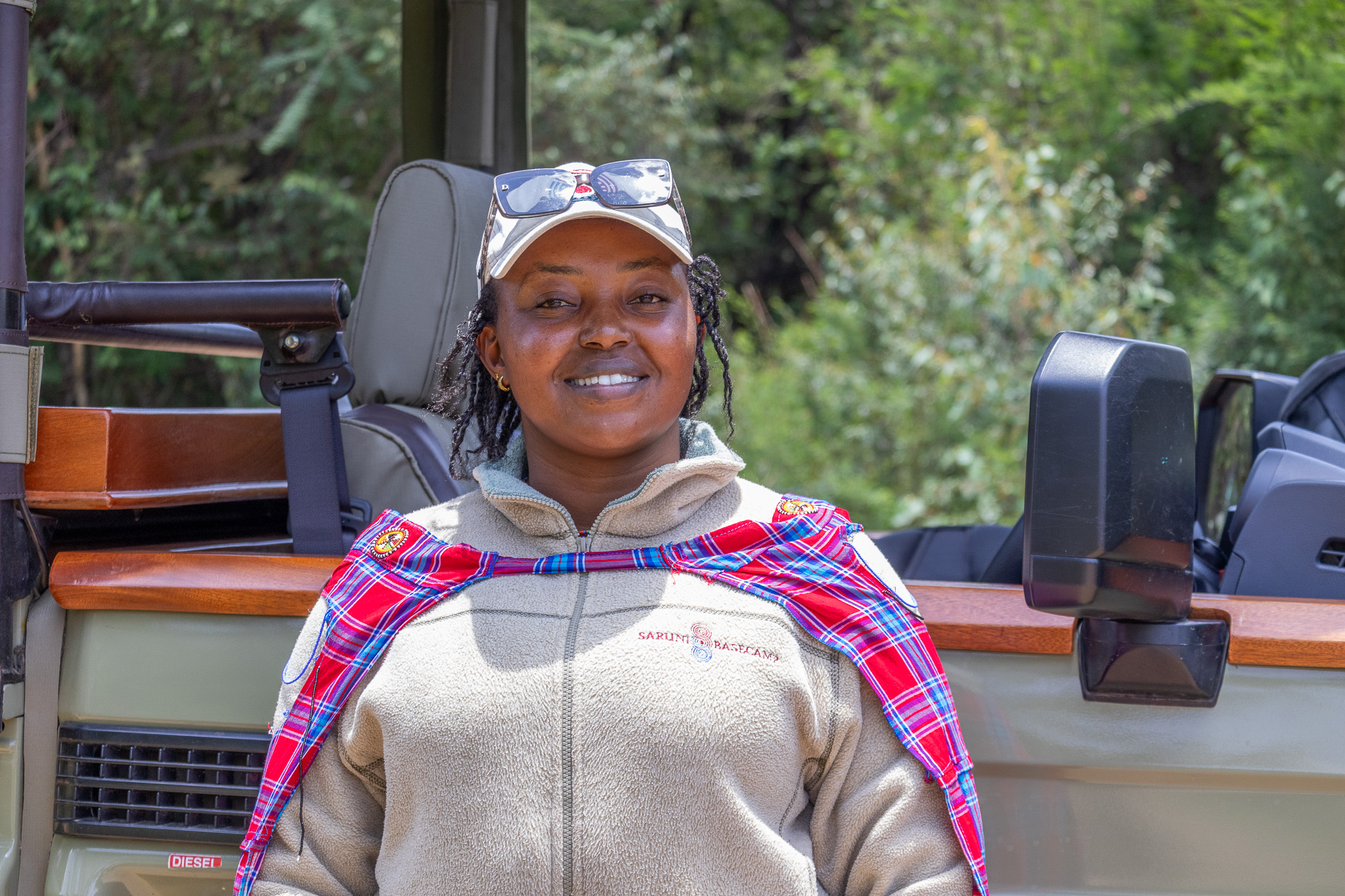
By the time Esmey travelled to South Africa for training with Field Guides Association of Southern Africa (FGASA), one of the most demanding guiding qualifications in the world, she already knew how to be a guide, but she went anyway.
There is a particular kind of restlessness that lives in the best guides, a hunger that the bush keeps feeding but never quite satisfies. For Esmey, that restlessness led her to the Greater Kruger region last March for FGASA NQF 2 nature guide certification.
The months that followed tested her in ways she hadn’t anticipated. Days began before the birds and ended long after the stars had settled in. Between those hours, she immersed herself in the full complexity of a living ecosystem between the classroom and the bush. Ecology and geology. Astronomy and animal behaviour. Botany, birds, mammals, reptiles, insects, conservation. After days that would exhaust most people, there were still books to read by lamplight and skills to practise before sleep.
But it was tracking that quietly changed something in her. She already understood that following an animal was about far more than footprints. What she discovered here was every trail is a story still being written leading to her being a certified CyberTracker Track & Sign Level II guide.
She returned to Kenya carrying all of it and more. A renewed wonder for everything she had already built. The instincts shaped by years in her own landscape. The relationships, the knowledge, the deep and particular love for this specific corner of the earth.
Esmey is the first FGASA – certified guide in the Mara region. She earned it as a woman in a profession that is still learning how to make room for one. She did it because she believes that people who place their trust in her deserve everything she must give.
Reading the Samburu Sky with Ian Lekiluai
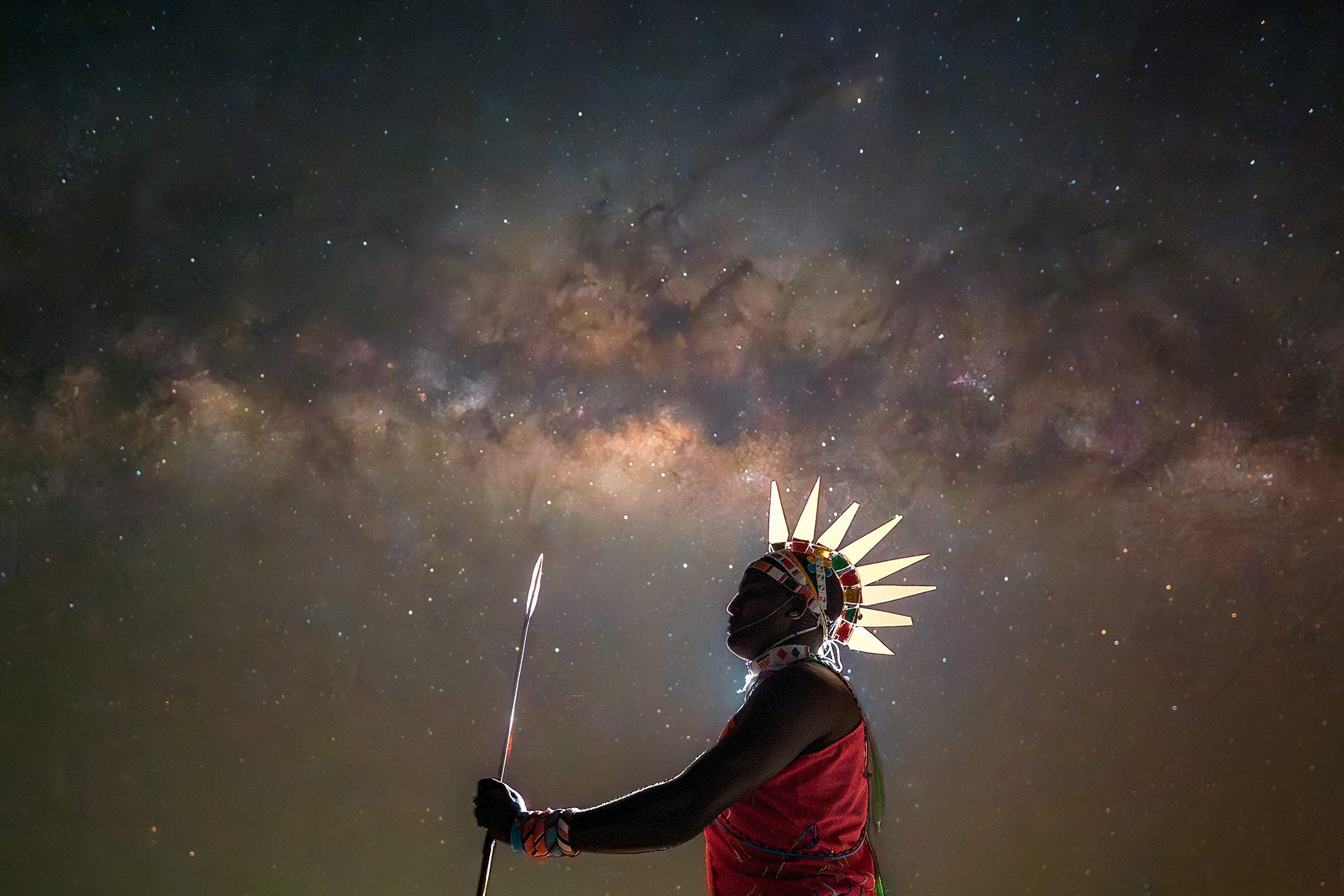
Ian’s education began with his grandfather, outside, under an open sky thick with stars.
As a young boy growing up in Samburu, he learned that Sirius, the brightest star visible from the northern horizon, part of the constellation Canis Major, is known to the Samburu people as Laingoni Lentapar: the bull that guards God’s cattle in the heavens. He learned that when Sirius appears overhead, the Samburu people believe it portends good fortune. He learned that warriors would navigate by the stars during months-long journeys, reading the sky the way others read a map.
Ian was fourteen when he began to pay close attention. There was no written record to consult. Everything was carried in stories, passed from one generation to the next across the firelight. He asked questions. He listened. He spent nights outside watching shooting stars move across the Milky Way, learning to feel at home beneath the immensity of the sky.
Now a senior Moran, he has made the night sky a defining part of his guiding. Every evening at camp, he gathers guests and takes them on a journey through the stars not just as points of light, but as a living calendar, a navigation system, a spiritual map that the Samburu have read for generations.
He will tell you, without embarrassment, that he loves the sky more than the animals. And once you have sat beneath the Samburu night with Ian as your guide, you will understand exactly why.
The Circle that Feeds the Mara: A Lesson from Lepaiyon Lekoitip
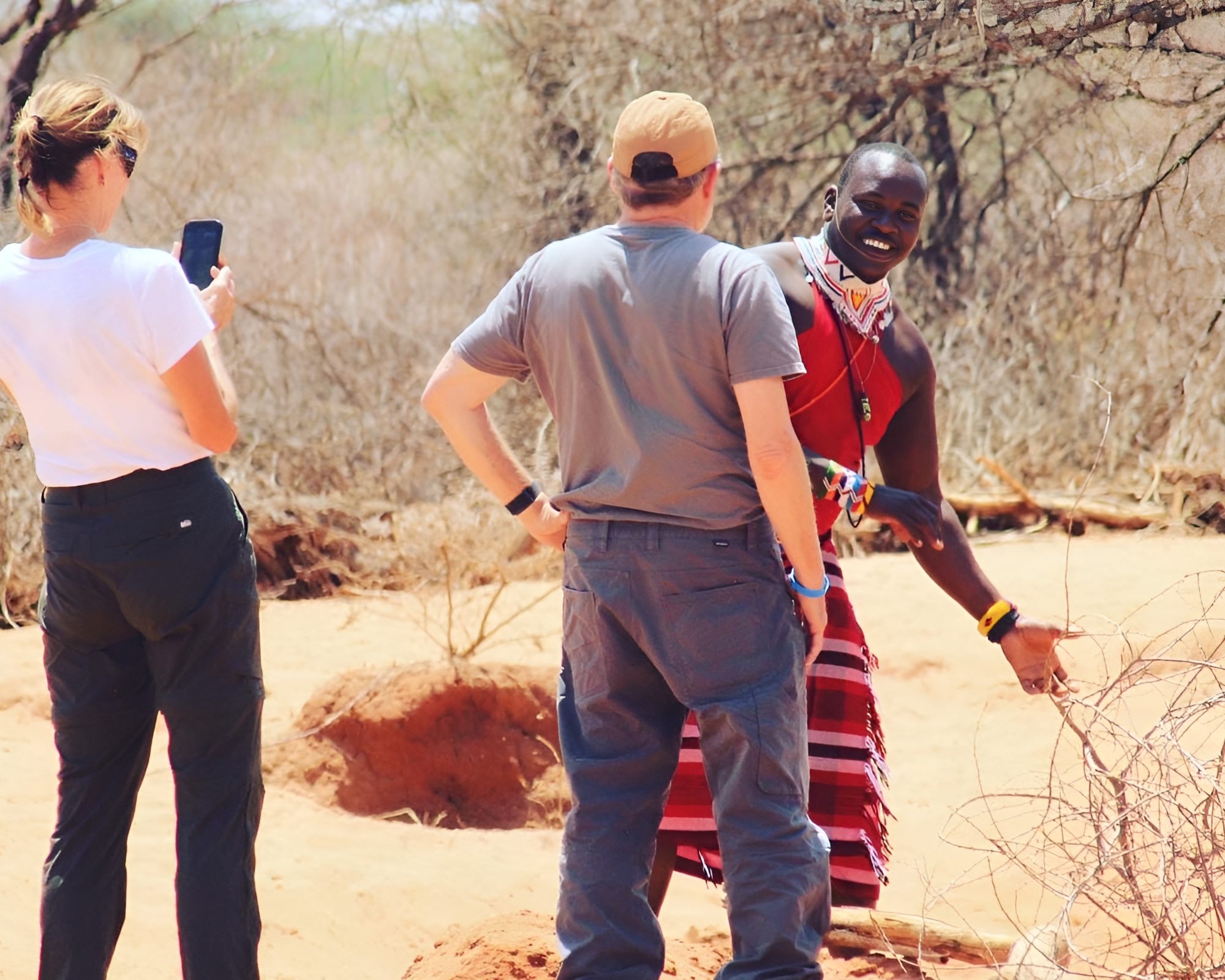
In the tall grass of Mara North, a lioness holds a zebra. Lepaiyon does not look away. He helps his guests understand why they shouldn’t either. What unfolds in front of them is the rule that keeps the wild alive.
Lepaiyon talks them through it quietly. That zebra’s life will feed the lioness and her cubs, and later the vultures, hyenas, and jackals who circle at a respectful distance. The bones will return nutrients to the soil. The grass will grow back stronger. Nothing, in the Mara, is wasted.
Lions hunt at night and succeed only once in every four attempts. This lioness beat the odds today. For her, this kill means her cubs will not go hungry tonight. For the conservancy, it means the predator-prey balance is holding and the ecosystem is doing exactly what it is supposed to do.
Lepaiyon knows it can be difficult to watch. He does not pretend otherwise. But he also knows that without the lioness, the zebra population would explode. Without the zebra, the grass would change. Without the balance, the Mara as we know it would simply cease to exist.
His guiding is built on that kind of honesty. He does not soften the wild to make it comfortable. He trusts his guests with its truth and in doing so, helps them fall in love with it for exactly what it is.
Where the Sky Learns to Sing — Joshua Taki’s Mara
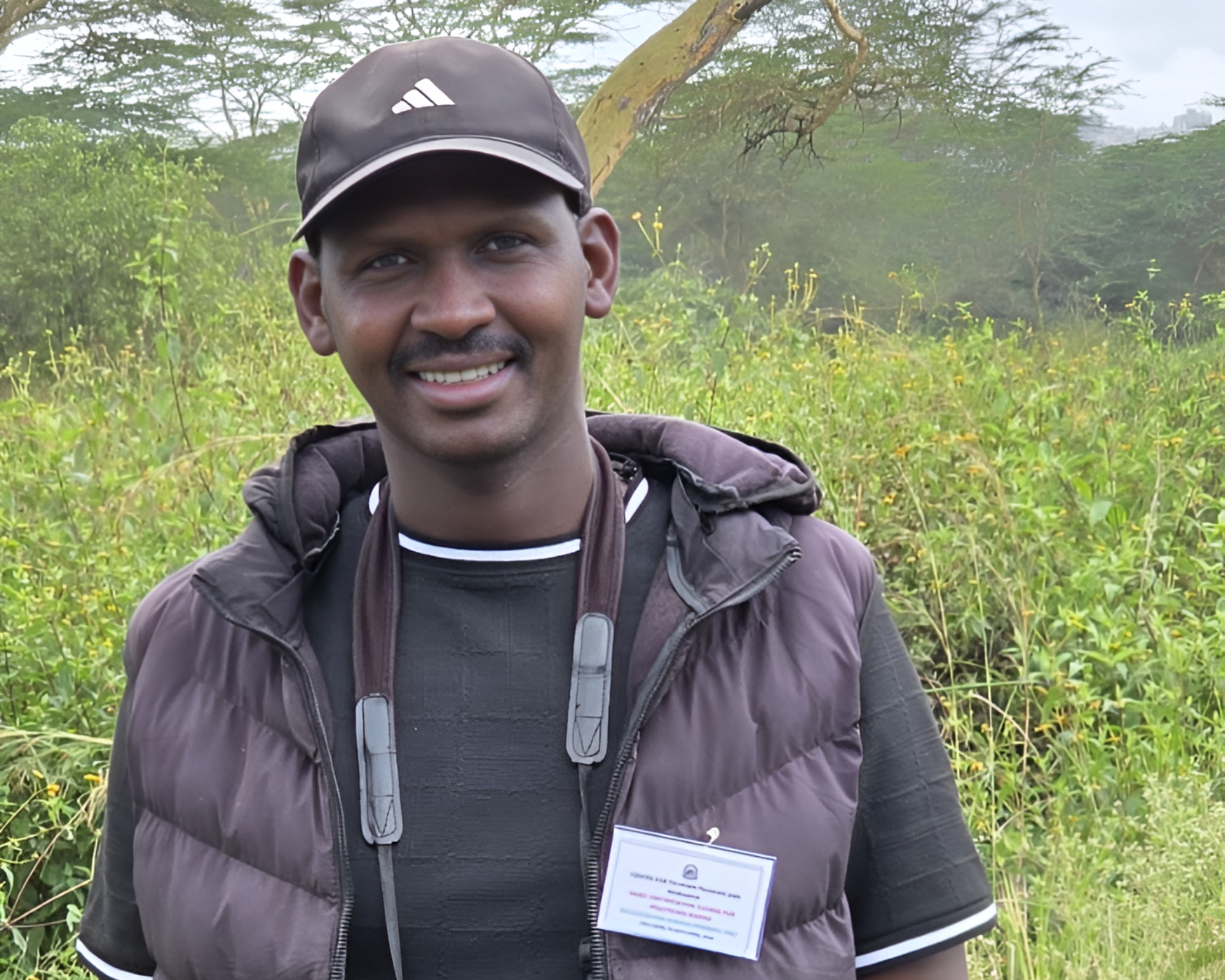
Ask Joshua about the Maasai Mara and he will tell you about the lilac-breasted roller before he mentions the lion.
That might surprise some guests. But it does not surprise anyone who has spent time in the field with him. Joshua has spent years making the case through every game drive, every walking safari, and every quiet moment beside a waterhole that the Mara is not only one of Africa’s great mammal destinations but one of its great bird destinations too.
With over 500 bird species recorded in the ecosystem, the evidence is hard to argue with. On any given morning, Joshua might point out the secretary bird striding purposefully through the grass, the kori bustard, the world’s heaviest flying bird, picking its way across open ground, or the southern ground hornbill, whose deep booming call carries across the plains like a drumbeat.
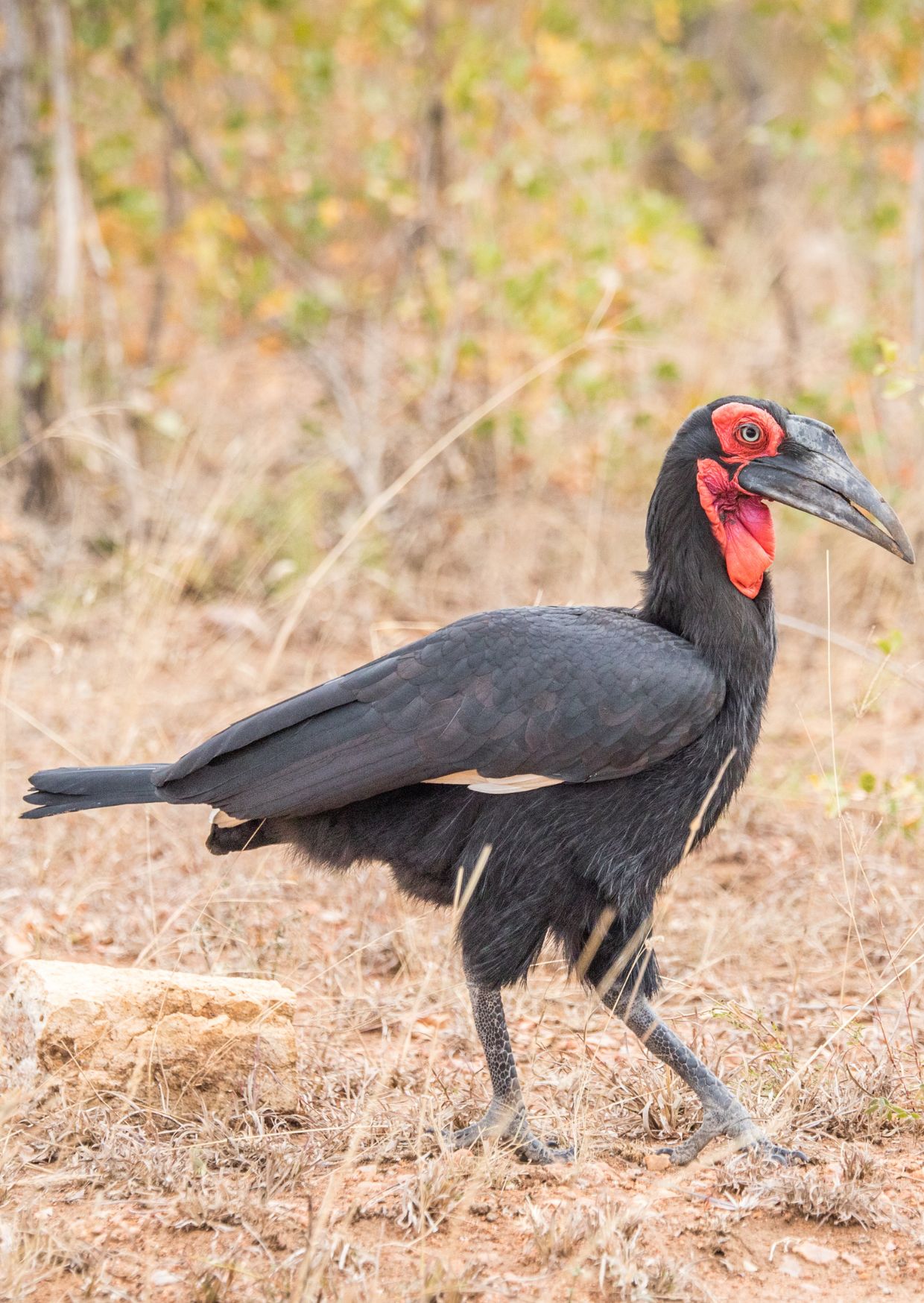

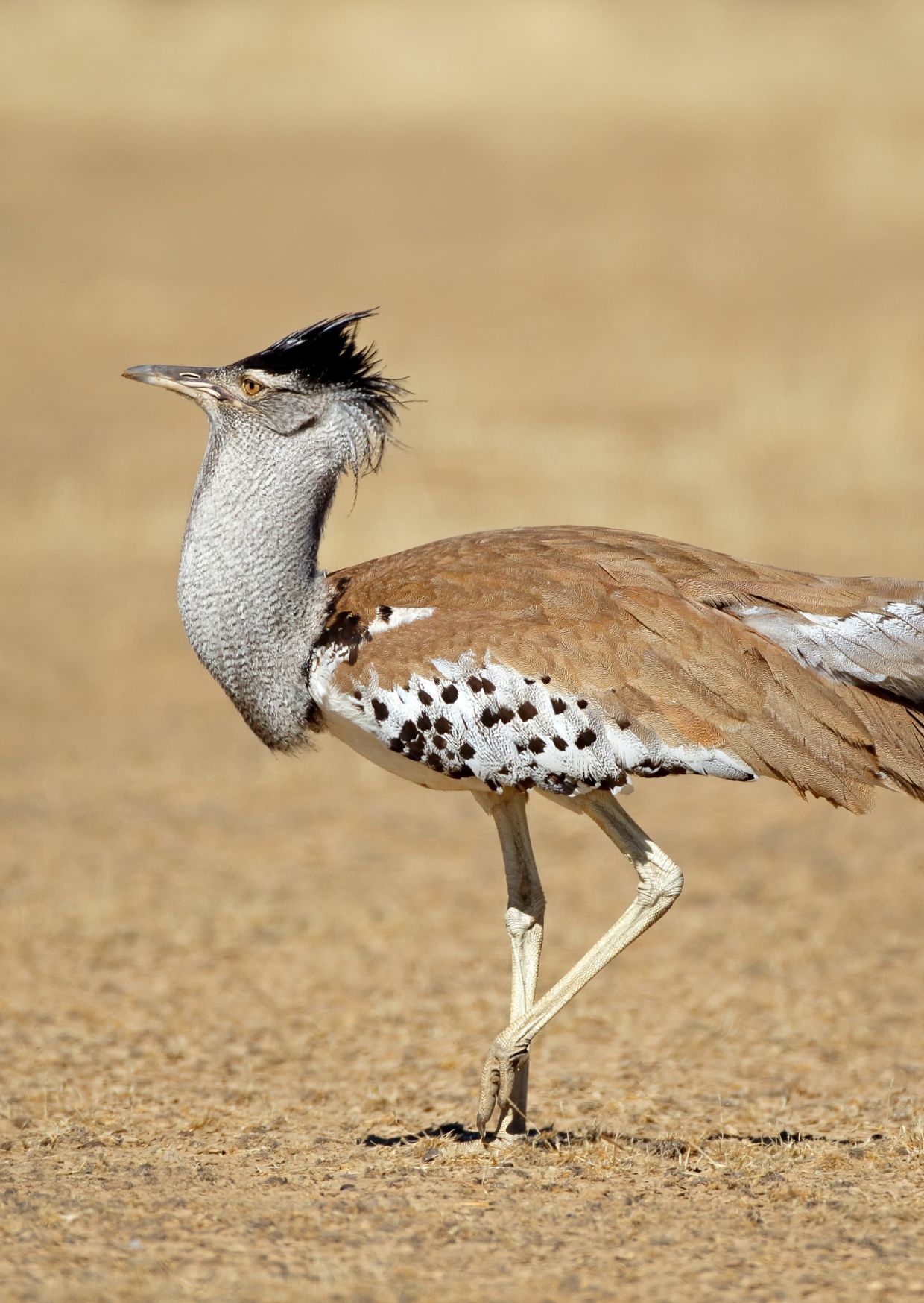
Birds, Joshua explains, are essential as they’re beautiful. They pollinate, disperse seeds, control insect populations, and scavenge the waste that would otherwise accumulate and spread disease. Remove them and the whole system falters.
Through World Migratory Bird Day and countless guest interactions, Joshua has helped build a culture of birding within the Mara North Conservancy raising awareness of the threats that migratory species face and deepening guests’ understanding of the ecosystem they have come to experience.
He connects people to a side of the Mara that most visitors never knew existed. And he leaves them unable to imagine the landscape without it.
First a Student of the Wild, Now Its Guide — Meet Jimmy Lekiondo
Before Jimmy became a guide, he was protecting wildlife from the front lines. His career began at Sera Conservancy, where he spent six months immersed in the daily discipline of conservation on the ground; patrolling, monitoring, learning the rhythms of an ecosystem and the threats that disturb them.
His ability to interpret the smallest clues, from a faint spoor in the dust to subtle changes in animal behaviour, transforms every safari into an immersive journey of discovery, revealing the stories of the wilderness that often go unnoticed.
It was demanding, physical, and formative work that gave him a deep, instinctive understanding of how the wild actually functions when no one is watching.
The turning point came during three months of intensive rhino tracking training. Tracking the critically endangered black rhino requires a level of focus and sensory awareness that few other roles demand. Jimmy learned to read the landscape like a text; decoding footprints, disturbed soil, broken vegetation, and animal behaviour with a precision that life-or-death conservation requires.
When he joined Saruni Basecamp as a guide, he brought every bit of that with him. The transition was not from one world to another. It was from protecting the wild to sharing it: from working behind the scenes to standing in front of guests and helping them see what he had spent years learning to see himself.
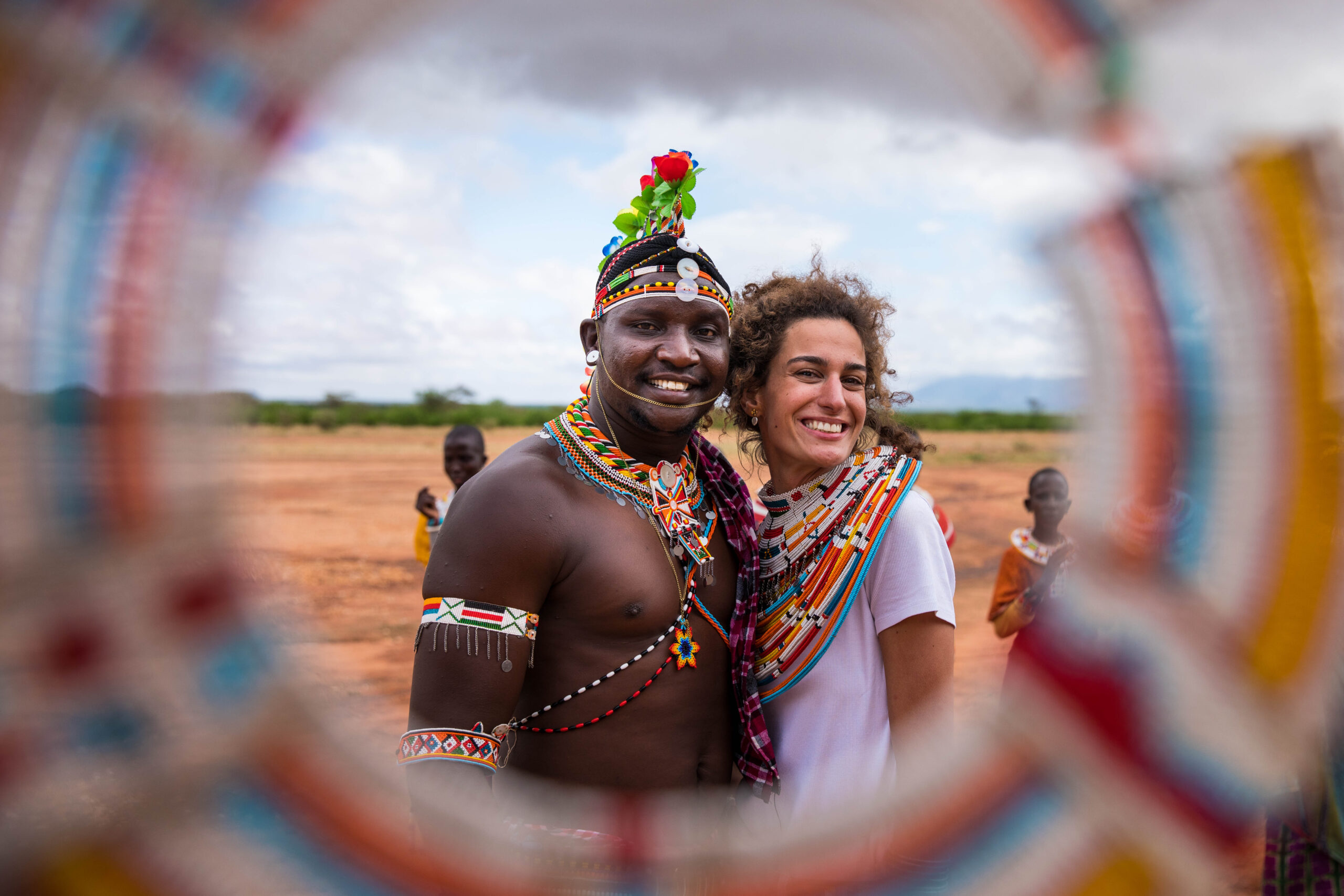
He is not simply pointing out animals on a game drive. He is reading the environment in real time, the way a ranger reads a patrol, and translating every detail into something his guests can carry home with them.
Jimmy is an FGASA NQF Level 2 Certified Field Guide, accredited by the Field Guides Association of Southern Africa (FGASA). This qualification provides a formal bridge between his deep Kenyan tracking heritage and internationally recognized standards in ecology, conservation, and exceptional guest experience.
He is also a Certified CyberTracker Track & Sign Level III, a prestigious qualification that recognizes advanced expertise in interpreting animal tracks and signs. The certification simply confirmed what those who have experienced the bush with Jimmy already know: he is a true reader of the wild.
At the end of every game drive, it is the guides who made it matter which isn’t a small thing. Exceptional safaris begin with exceptional people and our guides prove it, every single day, long before the rest of the world wakes.